For disabled people, being hissed at is a constant bugbear. Of course, I’m not talking about people making snake-like sounds in our general direction, it’s a new term I’ve coined for that catch-all scourge of our times, health & safety!
Wheelchair using friends of mine are constantly being told that they can’t do this or that because they constitute ‘fire hazards’ and the like. And we live in such a compensation-obsessed culture, that companies are being advised by their insurers to play it safe rather than using a bit of common sense.
Hissing can come from the most unexpected quarters: on Saturday evening I was enjoying a swim at the Riverside health club, of which I’ve been a member since it opened in 1996. I’m a regular user of the gym and use the swimming pool at least once a week as part of my on-going campaign to retain my musculo-skeletal mobility and to keep my weight down.
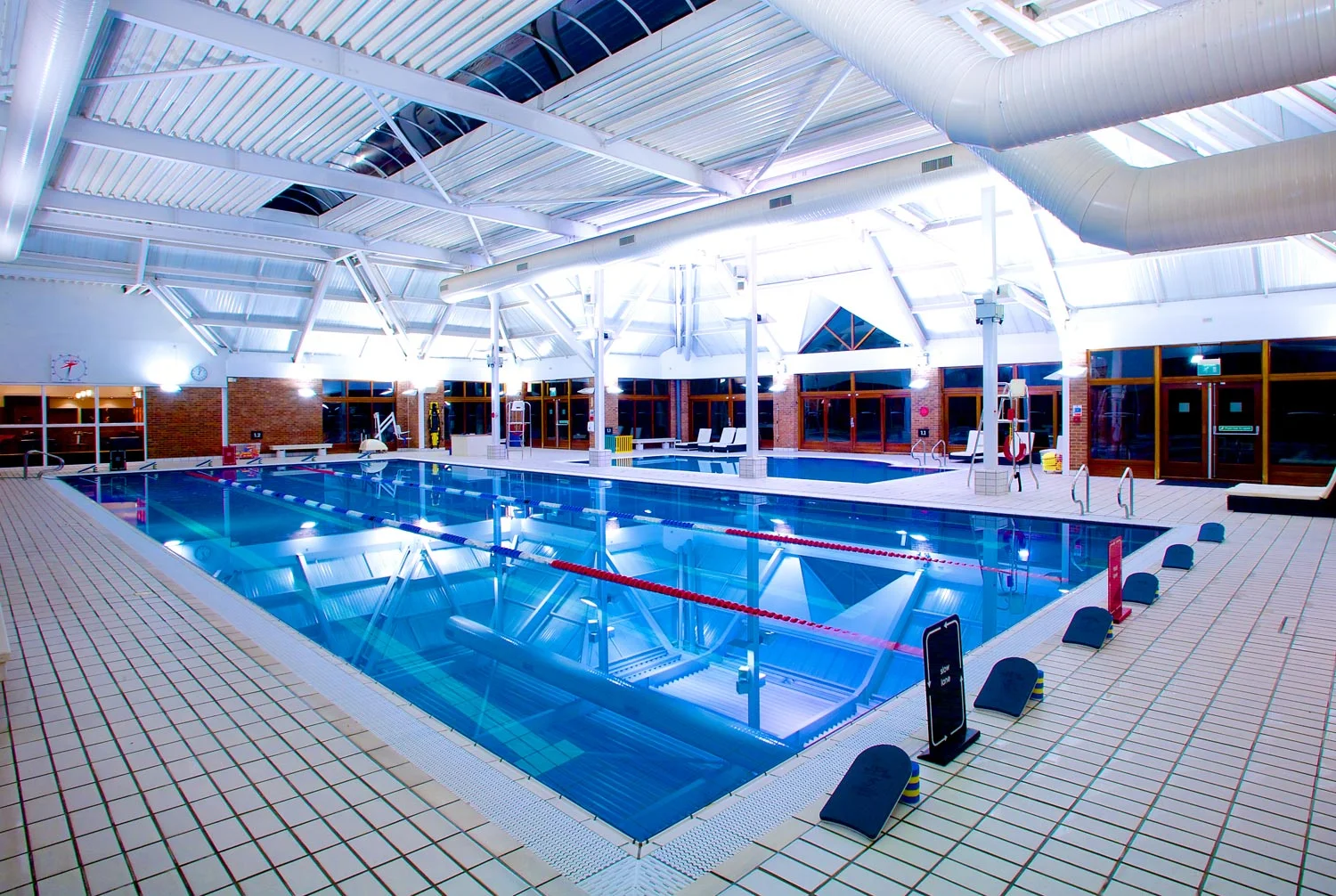
Riverside’s impressive 25m pool
A few years ago, I started to experience problems with my swimming technique. I would often swim on my front and hold a float so that my head stayed out of the water rather than having to bob up and down as I had previously done. I started to notice that my left arm went cold and I had pins and needles in the fingers of my left hand.
When I spoke to my physio/massage therapist, she told me that keeping my neck back in that position and swimming some 1,000m each time, was trapping a nerve in my neck and would cause me even more problems if I didn’t re-think my technique.
I’m fortunate in that one of my PAs, Sylwia, is an extremely able swimmer – she used to swim and dive competitively during her teens. She’s also a fairly smart cookie.
She told me I had to learn to swim all over again and that she would help me to do so.
I had thought that I was a fairly competent swimmer, but Sylwia told me that my position in the water had always been wrong. Actually, she is contemptuous of most of the pool users at Riverside:
“They’re not swimming – they’re just mixing water,” she says.
Once I started swimming properly, it was jolly hard work. This was normal, Sylwia said, because I was now using my muscles properly and my position in the water was as it should be. But in order to give me a bit of a helping hand, she suggested acquiring a pair of training flippers and a snorkel.
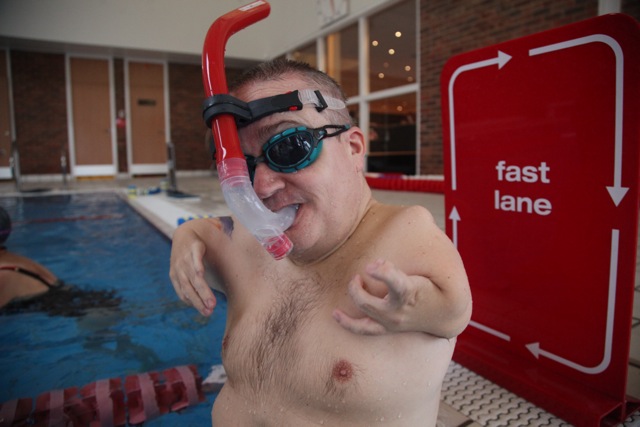
No longer mixing water – the snorkel makes all the difference
I love the training flippers because they allowed me to glide through the water like a dolphin. And the snorkel was handy because it meant that I could keep my head in the water and not worry about having to raise my head every few strokes to breathe.
After a few months, Sylwia told me that I could get rid of the flippers because my muscle strength had improved sufficiently for me to propel myself through the water unaided. I was a little disappointed at first, but now I’m very used to swimming with just my snorkel and goggles.
Last Saturday, a young woman dressed in a tailored trouser suit was perched on the high stool where the lifeguards normally sit. While I was swimming she came and had a word with Sylwia.
Didn’t Sylwia realise, the duty manager asked, that equipment like snorkels and flippers contravened company safety policy?
While its facilities are fabulous, Riverside has always been poorly managed – things have scarcely improved since it was taken over by Virgin Active.
Sylwia wondered why there should be a problem with my snorkel.
“Well, the thing is, it’s hard to check whether people are breathing when they use them,” the manager explained.
When I’d finished my swim, I went to have a word. I patiently explained that speaking to a disabled person’s PA, instead of speaking to them first, was extremely poor etiquette. I went on to describe the reason for the use of my snorkel which, by this time, the duty lifeguard had already pronounced as acceptable to the besuited manager.
I also pointed out the folly that lead to the assumption that someone who was swimming might not be breathing.
“Yes,” she said. “I can see that you’re a very strong swimmer anyway – much stronger than me.”
Given that she had already confirmed that she was a trained lifeguard, I found this slightly disturbing. More disturbing still was the idea that her smart business suit was appropriate attire in which to jump into a pool and rescue someone in difficulty.
Now, I wonder what Virgin Active’s health and safety policy would have to say about that?

Yes I have been hissed at. I too use flippers, I had done so for years in the Swansea University pool. Lots of people did, disabled or not. We then had a new one built, a great opportunity to make this flag ship accessible with a side ramp so people in wheelchairs could wheel them selves in and people with week arms could walk in, but no, they think everyone likes a hoist, so they made the new steps into the pool more difficult to use. On my first trip with my flippers I was told they were a health and safety risk and could no longer be used, for 20 years they had been fine but now they posed a risk. Needless to say after being " hissed" at we all " hissed " back and there are two designated flipper and paddle lanes available at lunch time. No ideal as I would like to swim with my family in the evening but a compromise.
More importantly when are they going to incorporate easy access to swimming pools, the sight of the armless Paralympic swimmers in 2012 being manhandled out of a brand new state of the art new pool was too much to bear. Swimming is the best exercise for people with disabilities and the elderly yet many are not prepared to be hoisted in when they can still walk or push themselves down a ramp. The planners need to be hissed and hoisted at big time.
Good points, well made Sue. There is no excuse for badly designed pools, and even less excuse for ill-thought out H & S policies which are tantamount to discrimination under the 2010 Equality Act. If the act was better policed by bodies like the Equality and Human Rights Commission, legal advice would be not to allow staff to engage in discriminatory behaviour. I’m very surprised that a company like Virgin hasn’t smelt the coffee though.